
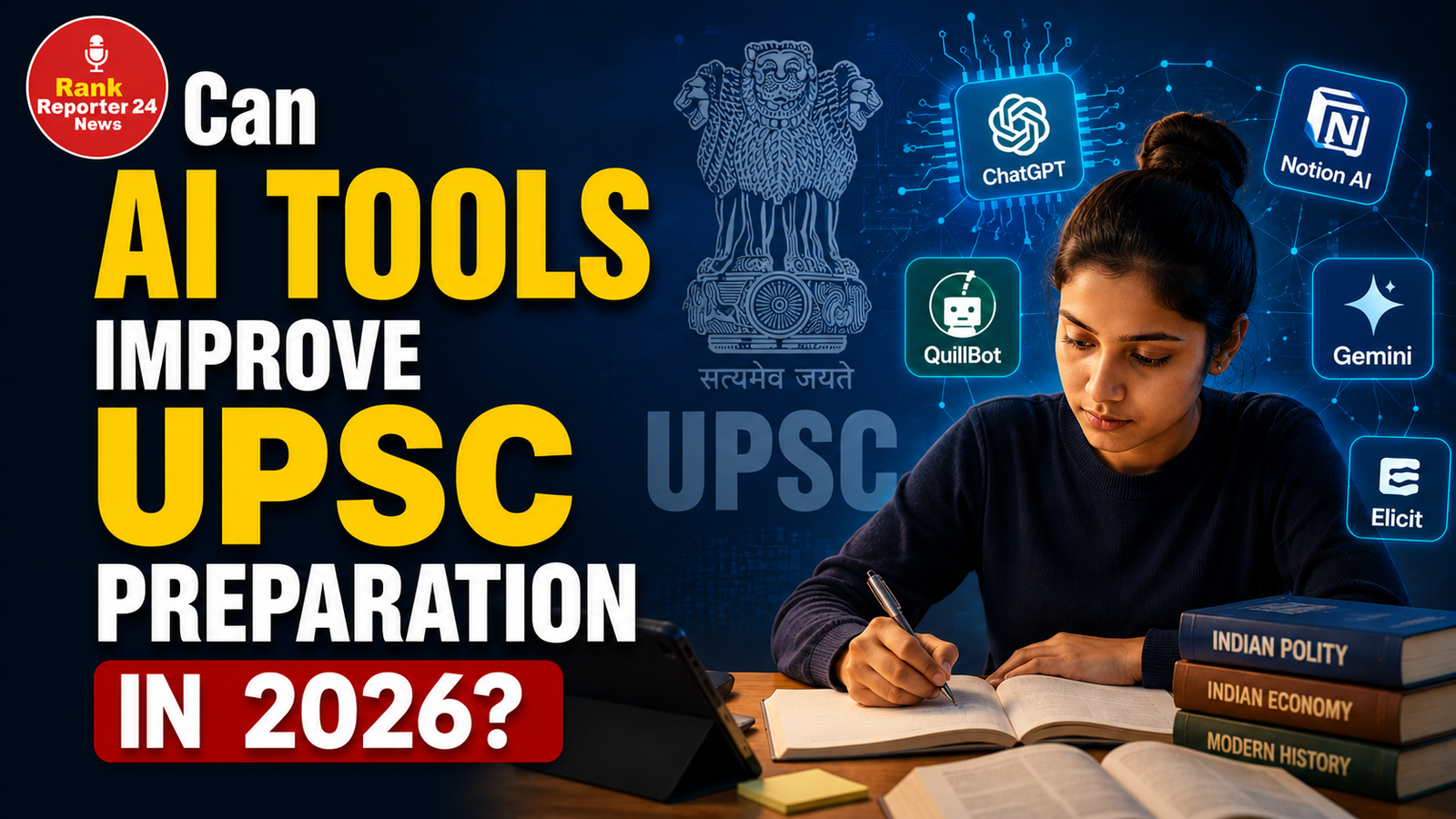
The landscape of UPSC preparation is changing rapidly. In 2026, artificial intelligence is becoming an important part of UPSC study plans. Many aspirants are now using AI-powered tools to improve their IAS preparation, save time, and manage vast amounts of information. As the competition in UPSC 2026 continues to grow, candidates are looking for smarter ways to prepare for the examination.
Can AI Tools Improve UPSC Preparation in 2026?
The UPSC examination is known for its extensive syllabus, dynamic current affairs, and multi-stage selection process. This is where AI tools can play a major role in IAS preparation. From creating personalized study plans to helping aspirants revise important topics, AI is making UPSC 2026 preparation more efficient than ever before.
Why AI is Becoming Popular for UPSC Preparation in 2026
Every year, lakhs of students begin their UPSC journey. However, many aspirants struggle with syllabus management, current affairs, answer writing, and revision. In 2026, AI tools are helping solve these challenges.
AI-powered platforms can analyze study patterns and recommend topics that require more attention. For IAS preparation, this means aspirants can focus on weak areas instead of spending unnecessary time on topics they already know well.
The growing popularity of AI in UPSC 2026 preparation is also linked to the availability of smart learning platforms that provide instant feedback and personalized guidance.
AI Can Create Personalized Study Plans for UPSC 2026
One of the biggest advantages of AI tools is the ability to create customized study schedules. Every UPSC aspirant has different strengths and weaknesses.
For example, one candidate may be strong in History but weak in Geography, while another may need additional focus on Current Affairs. AI tools can assess performance and create a personalized roadmap for IAS preparation.
This personalized approach helps aspirants preparing for UPSC 2026 allocate their study hours more effectively and improve overall productivity.
Read: Best 10 IAS Coaching in Delhi
AI Helps Manage the Vast UPSC Syllabus
The UPSC syllabus is extensive and covers multiple subjects such as History, Geography, Polity, Economics, Environment, Ethics, and Science.
AI tools can simplify IAS preparation by breaking down the syllabus into manageable sections. They can generate topic-wise checklists, revision schedules, and progress reports.
For UPSC 2026 aspirants, this structured approach reduces confusion and ensures complete syllabus coverage before the examination.
AI Can Improve Current Affairs Preparation
Current affairs remain one of the most important aspects of UPSC preparation. Reading multiple newspapers, government reports, and magazines can be time-consuming.
AI tools can summarize important news articles and generate concise notes. This helps aspirants stay updated without spending several hours every day.
During IAS preparation, candidates often struggle to connect current affairs with static subjects. AI can help establish these connections, making UPSC 2026 preparation more integrated and effective.
AI-Powered Answer Writing for UPSC Mains
Answer writing is a crucial part of UPSC Mains. Many aspirants know the content but struggle to present their answers effectively.
AI tools can evaluate answer structure, grammar, clarity, and relevance. They can provide suggestions for improvement and highlight missing points.
For IAS preparation, regular answer-writing practice supported by AI feedback can help candidates improve their performance significantly.
Many aspirants preparing for UPSC 2026 are already using AI-based platforms to receive instant evaluation instead of waiting days for manual feedback.
AI Can Help in UPSC Prelims Preparation
The UPSC Prelims examination requires extensive practice and revision. AI tools can generate quizzes, mock tests, and topic-wise assessments.
These tools can identify recurring mistakes and recommend targeted revision strategies.
For IAS preparation, such insights are valuable because they help aspirants focus on areas where they are losing marks.
Candidates targeting UPSC 2026 can benefit from AI-generated test series that adapt to their performance levels and provide a more personalized learning experience.
AI for Revision and Retention
Revision is one of the most challenging aspects of UPSC preparation. With such a large syllabus, aspirants often forget previously studied topics.
AI tools use spaced repetition techniques to improve memory retention. They can remind candidates when to revise specific topics based on their learning patterns.
For effective IAS preparation, this approach ensures long-term retention of information and reduces the chances of forgetting important concepts before UPSC 2026.
AI Can Support Optional Subject Preparation
Optional subjects play a significant role in determining success in the UPSC examination.
AI tools can help organize notes, summarize reference books, and generate practice questions for optional subjects.
Whether a candidate chooses Public Administration, Sociology, Geography, History, Political Science, or Anthropology, AI can contribute to more organized IAS preparation.
For UPSC 2026, efficient optional subject preparation can become a key advantage for aspirants using AI-powered learning methods.
Benefits of AI Tools in IAS Preparation
Some major benefits of AI for UPSC aspirants include:
- Personalized study plans.
- Faster current affairs analysis.
- Better answer-writing feedback.
- Smart revision schedules.
- Performance tracking.
- Time management support.
- Adaptive mock tests.
- Quick note generation.
These benefits make AI a valuable companion for IAS preparation in 2026.
Read : Best Online UPSC Coaching
Limitations of AI in UPSC Preparation
Although AI offers many advantages, it cannot completely replace traditional learning methods.
The UPSC examination requires analytical thinking, balanced judgment, and deep understanding of social, political, and economic issues.
AI can assist in IAS preparation, but aspirants must still read standard books, government reports, and authentic sources.
For UPSC 2026, AI should be viewed as a support system rather than a substitute for hard work and disciplined study.
Best Way to Use AI for UPSC 2026
The most effective strategy is to combine AI tools with conventional UPSC preparation methods.
Aspirants should:
- Use AI for planning and revision.
- Read standard books thoroughly.
- Practice answer writing regularly.
- Follow authentic current affairs sources.
- Take mock tests consistently.
- Analyze mistakes using AI-generated insights.
This balanced approach can enhance IAS preparation and improve overall performance in UPSC 2026.
Related articles
- Best UPSC Coaching in Delhi
- Top 5 Online UPSC Coaching
- Top 10 UPSC Coaching in India
- Best IAS Coaching in Patna
- Top 10 IAS Coaching in Karol Bagh
- Plutus IAS Delhi Reviews
- Vajiram and Ravi IAS Reviews
- Drishti IAS Delhi Reviews
Conclusion
AI tools have the potential to significantly improve UPSC preparation in 2026. From personalized study plans and smart revision systems to answer-writing evaluation and current affairs summaries, AI is transforming the way aspirants approach IAS preparation.
However, success in UPSC 2026 will still depend on dedication, consistency, conceptual clarity, and regular practice. AI can make IAS preparation more efficient, but the determination and effort required to clear UPSC must come from the aspirant.
As technology continues to evolve, AI is likely to become an increasingly important partner in UPSC 2026 preparation, helping aspirants study smarter and perform better in one of India’s most competitive examinations.
Last Updated: May 30, 2026