
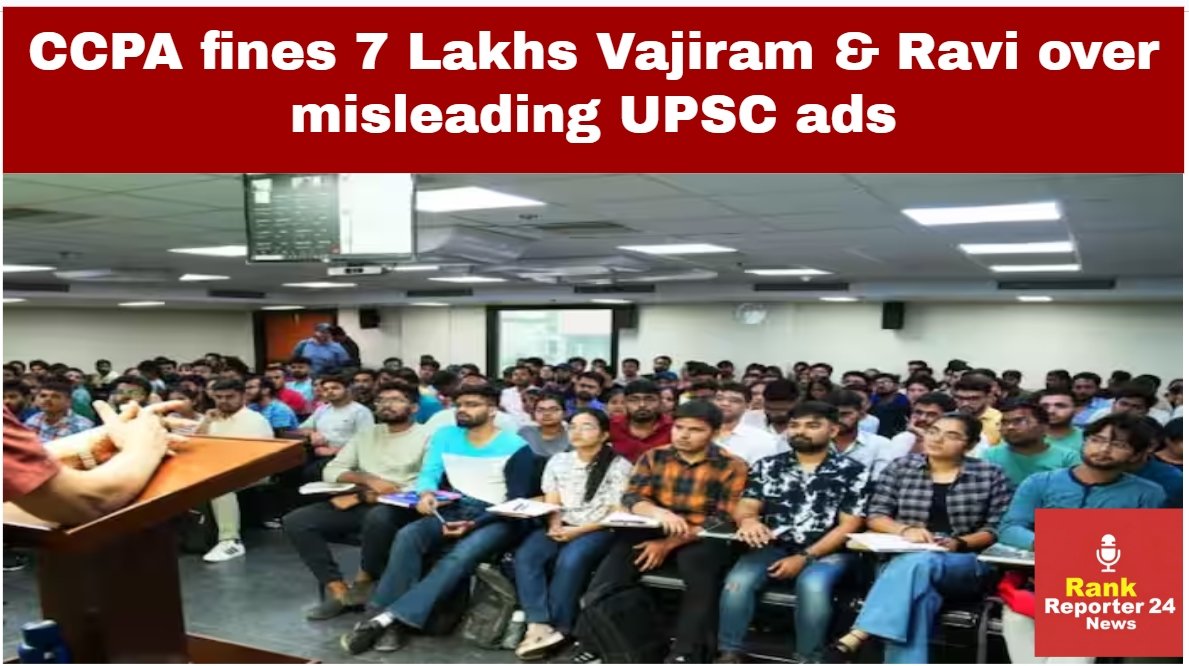
The UPSC coaching industry in India has once again come under scrutiny after the Central Consumer Protection Authority (CCPA) imposed a penalty of Rs. 7 lakh on Vajiram and Ravi IAS Study Centre for allegedly publishing misleading advertisements related to UPSC Civil Services Examination results. The action has triggered a major discussion among UPSC aspirants, coaching institutes, education experts, and policymakers regarding transparency in coaching advertisements.
According to official findings, the issue revolved around the manner in which successful UPSC candidates were showcased in advertisements without clearly disclosing the exact courses they had enrolled in. The case highlights the growing importance of consumer rights in the education sector and raises questions regarding how coaching institutes market their success stories.
The decision against Vajiram and Ravi IAS Study Centre is being viewed as a significant step toward ensuring greater accountability within India’s highly competitive coaching industry. The UPSC preparation market has expanded rapidly over the past decade, with institutes spending substantial amounts on marketing campaigns that prominently feature successful candidates.
What Happened in the Vajiram and Ravi IAS Advertisement Case?
The Central Consumer Protection Authority (CCPA) imposed a penalty of Rs. 7 lakh on Vajiram and Ravi IAS Study Centre for allegedly concealing important information while promoting UPSC success stories. According to reports, the institute prominently displayed names, photographs, and achievements of successful UPSC Civil Services Examination candidates in its advertisements. However, the advertisements allegedly failed to disclose the exact courses taken by those candidates.
Authorities observed that potential students could be misled into believing that the successful candidates had completed major classroom programs from the institute, while the actual enrollment details were not clearly communicated. The omission of such information was considered a form of misleading advertisement under consumer protection regulations.
Must Read: Best IAS Coaching In Delhi
Why Did the CCPA Take Action?
The Central Consumer Protection Authority functions under the Consumer Protection Act, 2019. The authority has the responsibility of protecting consumers from false claims, misleading advertisements, and unfair trade practices.
According to the CCPA, advertisements should provide complete and transparent information to consumers. When coaching institutes use photographs and names of successful candidates, students naturally assume that those candidates underwent comprehensive coaching programs at the institute. If important information regarding the nature of enrollment is concealed, consumers may not be able to make informed decisions.
The authority concluded that such advertisements may create a misleading impression regarding the effectiveness of different courses offered by coaching institutes.
Statement by Union Minister Prahlad Joshi
Union Minister for Consumer Affairs, Food and Public Distribution Prahlad Joshi stated that the action reinforces consumers’ right to be informed and reflects the government’s commitment toward transparency and accountability in the coaching sector.
According to reports, the minister highlighted that the CCPA has already issued dozens of notices to coaching insti tutes across India and imposed penalties exceeding Rs. 1.46 crore in various cases involving misleading advertisements.
The statement indicates that regulatory authorities are increasing their focus on ensuring ethical advertising practices in educational services.
Read: Best IAS Coaching in India
Understanding Misleading Advertisements in UPSC Coaching
Every year after UPSC Civil Services Examination results are announced, coaching institutes release advertisements featuring successful candidates. These advertisements often display:
- UPSC toppers’ photographs
- AIR rankings
- Selection numbers
- Success percentages
- Student testimonials
- Course promotions
While showcasing successful students is not illegal, regulatory authorities believe that advertisements should clearly disclose the exact relationship between the candidate and the coaching institute.
For example, there can be a significant difference between:
- A student who completed a full GS Foundation Course
- A student who joined only a Test Series
- A student who attended only an Interview Guidance Program
- A student who attended a short revision course
If these distinctions are not mentioned, aspirants may assume that all successful candidates completed comprehensive paid programs from the institute.
Consumer Protection Act and Coaching Institutes
The Consumer Protection Act, 2019 widened the scope of consumer rights in India. Under the Act, misleading advertisements are treated as violations of consumer rights.
The law empowers the CCPA to:
- Investigate misleading advertisements
- Order discontinuation of false advertisements
- Impose penalties
- Protect consumer interests
- Prevent unfair trade practices
The Act recognizes that consumers have a right to accurate information before purchasing any service, including educational services.
Why UPSC Aspirants Are Affected
The UPSC examination is one of India’s most competitive examinations. Every year, lakhs of students spend significant amounts on coaching programs.
Many aspirants select coaching institutes based on:
- Past results
- Success rate
- Faculty reputation
- Student reviews
- Toppers’ recommendations
When advertisements exaggerate or conceal important details, students may choose institutes based on incomplete information. Therefore, transparency becomes essential in helping aspirants make informed educational investments.
Read: Vajiram and Ravi IAS Reviews
Growing Scrutiny of Coaching Institutes
The action against Vajiram and Ravi is not an isolated incident. Over the last few years, multiple coaching institutes have faced regulatory scrutiny for advertising practices.
The CCPA has investigated several coaching centers for:
- Misleading success claims
- Exaggerated selection numbers
- Incomplete disclosure of candidate enrollment
- Promotional claims lacking evidence
- Misrepresentation of results
Reports indicate that multiple institutes have received notices and penalties under consumer protection regulations.
The Business of UPSC Coaching Advertisements
The UPSC coaching industry has become a multi-crore sector. Institutes compete aggressively to attract students through:
- Newspaper advertisements
- Social media campaigns
- YouTube promotions
- Website banners
- Toppers’ interviews
- Rank holder posters
As competition increases, institutes often use successful candidates as marketing tools. This makes transparency even more important because aspirants frequently rely on these advertisements when selecting coaching institutes.
The latest action by the CCPA signals that regulators expect coaching advertisements to maintain higher standards of accuracy and disclosure.
Impact on Coaching Industry
The penalty imposed on Vajiram and Ravi may have broader implications for the coaching sector.
Potential impacts include:
Increased Transparency
Institutes may start providing detailed information regarding:
- Course enrollment
- Duration of study
- Nature of programs attended
- Paid versus free programs
Better Consumer Awareness
Students may become more cautious while evaluating coaching advertisements and marketing claims.
Regulatory Compliance
More institutes may review their promotional materials to ensure compliance with consumer protection laws.
Ethical Marketing Practices
The coaching industry may gradually move toward more transparent advertising standards.
What Students Should Check Before Joining Coaching
Instead of relying solely on advertisements, aspirants should verify:
Faculty Quality
Research faculty experience and teaching methods.
Course Structure
Understand exactly what is included in the program.
Test Series
Evaluate the quality of mock tests and answer evaluation.
Student Reviews
Read genuine student feedback from multiple sources.
Mentorship Support
Check whether personalized guidance is available.
Success Stories
Verify the exact role played by the institute in successful candidates’ preparation.
These factors provide a more accurate assessment than advertisements alone.
Importance of Transparency in Education
Education is a major financial and emotional investment. Students and parents often spend substantial amounts on UPSC preparation.
Transparent information helps consumers:
- Compare coaching institutes
- Understand course offerings
- Assess value for money
- Make informed decisions
- Avoid unrealistic expectations
The recent action against Vajiram and Ravi reinforces the idea that educational marketing should prioritize accuracy over promotional exaggeration.
Social Media Reactions
The news has generated significant discussion among UPSC aspirants on social media platforms. Many students welcomed stricter regulations and argued that transparency would benefit genuine aspirants.
Others emphasized that students should conduct independent research rather than relying solely on coaching advertisements.
The debate has once again highlighted the larger issue of commercialization within the competitive examination coaching ecosystem.
Lessons for UPSC Aspirants
The incident offers several important lessons:
- Verify all coaching claims independently.
- Do not select coaching based solely on advertisements.
- Understand exactly which course is being promoted.
- Compare multiple institutes before enrollment.
- Focus on teaching quality rather than marketing campaigns.
- Read authentic student reviews.
- Attend counseling sessions before admission.
These steps can help students make better educational choices.
Future of Coaching Regulations
Experts believe that regulatory oversight of educational advertising may continue to increase. Authorities are likely to monitor:
- Success rate claims
- Rank advertisements
- Course disclosures
- Fee transparency
- Promotional guarantees
Such measures could improve accountability across the coaching industry and strengthen consumer protection.
Conclusion
The Rs. 7 lakh penalty imposed on Vajiram and Ravi IAS Study Centre marks another significant development in the regulation of educational advertisements in India. The Central Consumer Protection Authority concluded that important information regarding successful UPSC candidates’ course enrollments was not adequately disclosed in advertisements, potentially misleading consumers.
The action reflects the government’s growing focus on transparency, accountability, and consumer rights within the coaching sector. For UPSC aspirants, the incident serves as a reminder that coaching advertisements should be evaluated carefully and supplemented with independent research before making admission decisions.
As regulatory scrutiny increases, coaching institutes across India may be required to adopt more transparent and responsible advertising practices, ultimately benefiting students and strengthening trust in the education sector.
Frequently Asked Questions (FAQs)
Why was Vajiram and Ravi fined Rs. 7 lakh?
The CCPA imposed the penalty because it found that important information regarding the courses taken by successful UPSC candidates was allegedly concealed in advertisements.
Which authority imposed the penalty?
The penalty was imposed by the Central Consumer Protection Authority (CCPA).
What is considered a misleading advertisement?
An advertisement may be considered misleading when it conceals important information or creates a false impression that influences consumer decisions.
Does this affect existing students?
The penalty primarily relates to advertising practices and does not directly impact current students’ academic programs.
Can coaching institutes use toppers in advertisements?
Yes, but regulatory authorities expect complete disclosure regarding the exact nature of the candidate’s enrollment and association with the institute.
What should UPSC aspirants check before joining coaching?
Students should verify faculty quality, course structure, mentorship, student reviews, and actual success data rather than relying only on advertisements.
What is the role of the CCPA?
The CCPA protects consumers from unfair trade practices and misleading advertisements under the Consumer Protection Act, 2019.
Have other coaching institutes faced similar action?
Yes, several coaching institutes have received notices and penalties regarding misleading advertisements.
Why is transparency important in coaching advertisements?
Transparency helps students make informed decisions regarding courses, fees, and coaching services.
What is the larger message from this action?
The action highlights that educational institutions must maintain accountability and provide accurate information to students while promoting their services.
Also Read
- Top Online UPSC Coaching
- Top 10 IAS Coaching in India
- Best IAS Coaching in Patna
- Top IAS Coaching in Karol Bagh
Last Updated: May 30, 2026